

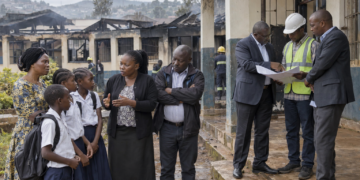






























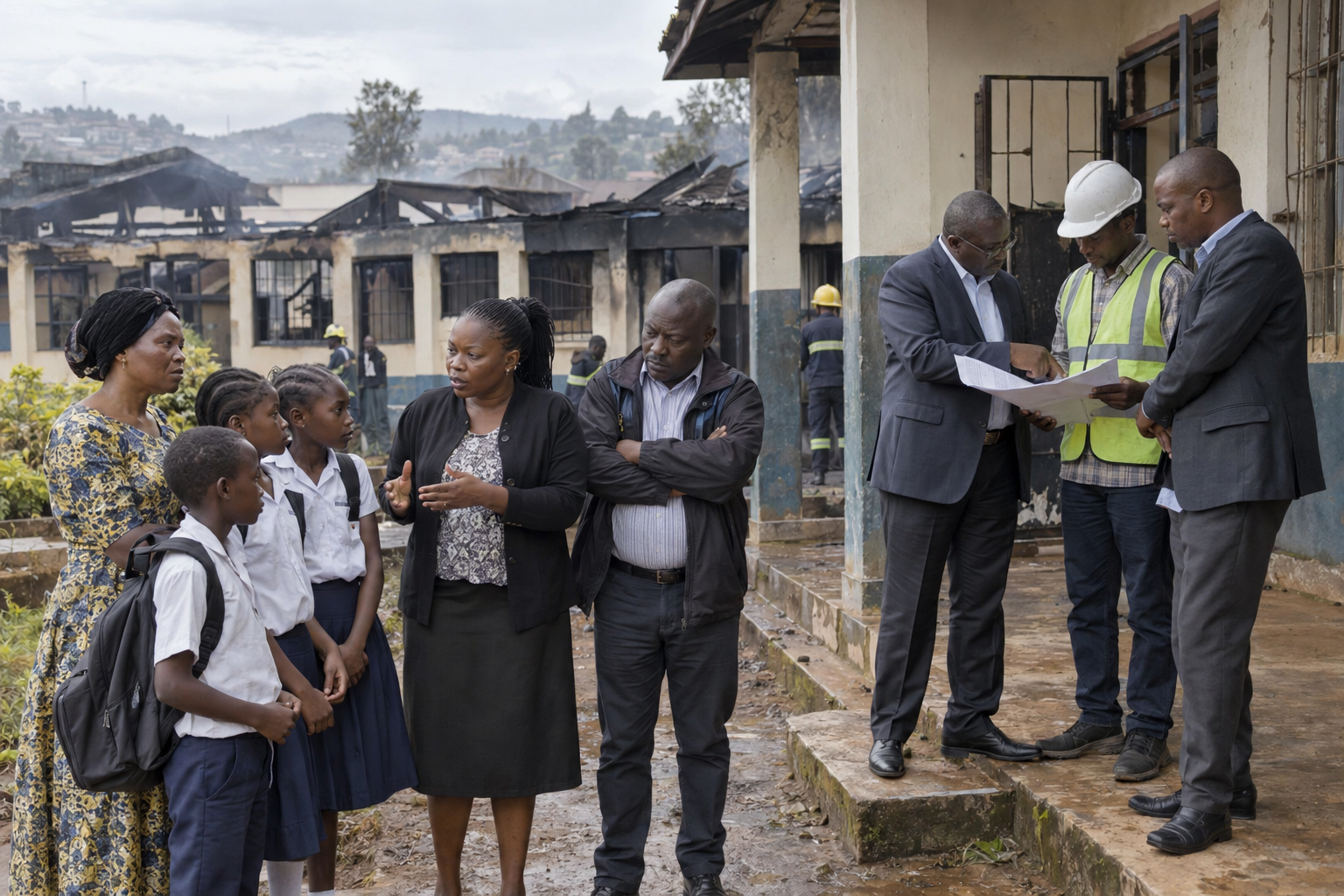
A child entering a classroom should not need an escape strategy. Yet in Bukavu, in the eastern Democratic Republic of Congo, the ordinary act of going to school ended in horror. A fire that reportedly began in a nearby house swept into Furaha secondary school and Ujamaa primary school. Provincial authorities said at least 26 students were killed, including 19 girls and seven boys. Dozens more were injured. Some suffocated; others were trampled as frightened pupils pressed toward an exit too narrow for the emergency unfolding around them.
The immediate temptation is to describe this as an accident and move on once the cause of the fire is identified. That would be a grave mistake. A spark may be accidental. A building that gives children too few safe ways out is a public failure. So is a cityscape where wooden homes and schools stand close enough for flames to move faster than rescuers. Disaster begins with fire, but catastrophe is built from decisions made long before smoke appears.
Bukavu lives under the control of the M23 movement, while the Congolese state contests that authority and the wider region remains trapped in conflict. Political control is therefore complicated; responsibility for children is not. Whoever collects fees, appoints administrators, licenses schools, controls streets or commands emergency services assumes a duty to keep pupils alive. No authority should be allowed to hide behind the conflict, and no outside government should treat rebel control as an excuse for indifference.
This tragedy also exposes a neglected form of inequality. We often measure educational injustice by enrollment, textbooks, teacher pay and examination results. We rarely ask whether a pupil can reach an exit in ninety seconds, whether windows open, or whether staff know who leads an evacuation. Safety is part of education because a school that cannot protect a child cannot credibly promise that child a future. The narrow doorway in Bukavu was not a minor design flaw. In the decisive minutes, it became a deadly bottleneck.
The response should begin with a rapid inspection of every school in Bukavu, followed by public results that families can understand. Each campus should have at least two usable exits, unlocked during lessons, clearly marked and kept free of desks or stored materials. Teachers and students need simple evacuation drills suited to their ages. Nearby residents should know how to raise an alarm, and clinics should have a shared method for registering casualties so families are not forced to search from one facility to another.
But inspections often become ceremonial: officials arrive, take notes and disappear. Bukavu needs a public safety ledger listing each school, its exits, its last drill, the hazards found and the date promised for repairs. Parents, teachers, local engineers, health workers and neighborhood representatives should be able to challenge false entries. In a divided city, transparent evidence can create accountability where political trust is scarce. A school should not reopen because a powerful person says it is safe; it should reopen when visible defects have been corrected.
International donors also need to reconsider what counts as educational support in a conflict zone. Funding classrooms without funding safe doors, fire-resistant materials, first-aid supplies and evacuation training is incomplete generosity. Modest safety work lacks the appeal of a new building or a large launch ceremony, but an outward-opening door can matter more than a painted sign. Aid agreements should reserve money for maintenance and require independent checks after construction, not merely photographs on completion day.
There must, of course, be an investigation into how the blaze started and how the schools responded. Its purpose cannot be limited to finding one person to blame. Investigators should reconstruct the movement of the fire and the crowd, identify where children became trapped, publish the findings and turn them into rules that apply across South Kivu. Families deserve truthful names and numbers, medical support for the injured, and compensation that does not depend on political allegiance.
The dead must not be reduced to a provisional toll that rises, hardens into a statistic and then fades. Their last moments pose a direct question to every authority with power in Bukavu: what will be different before the next school bell? Mourning matters, but a safer doorway is a more honest tribute. The measure of the response will be found in ordinary classrooms months from now, when children can see two clear exits and adults have finally learned that protection is not an optional subject.