
































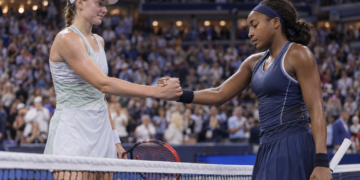







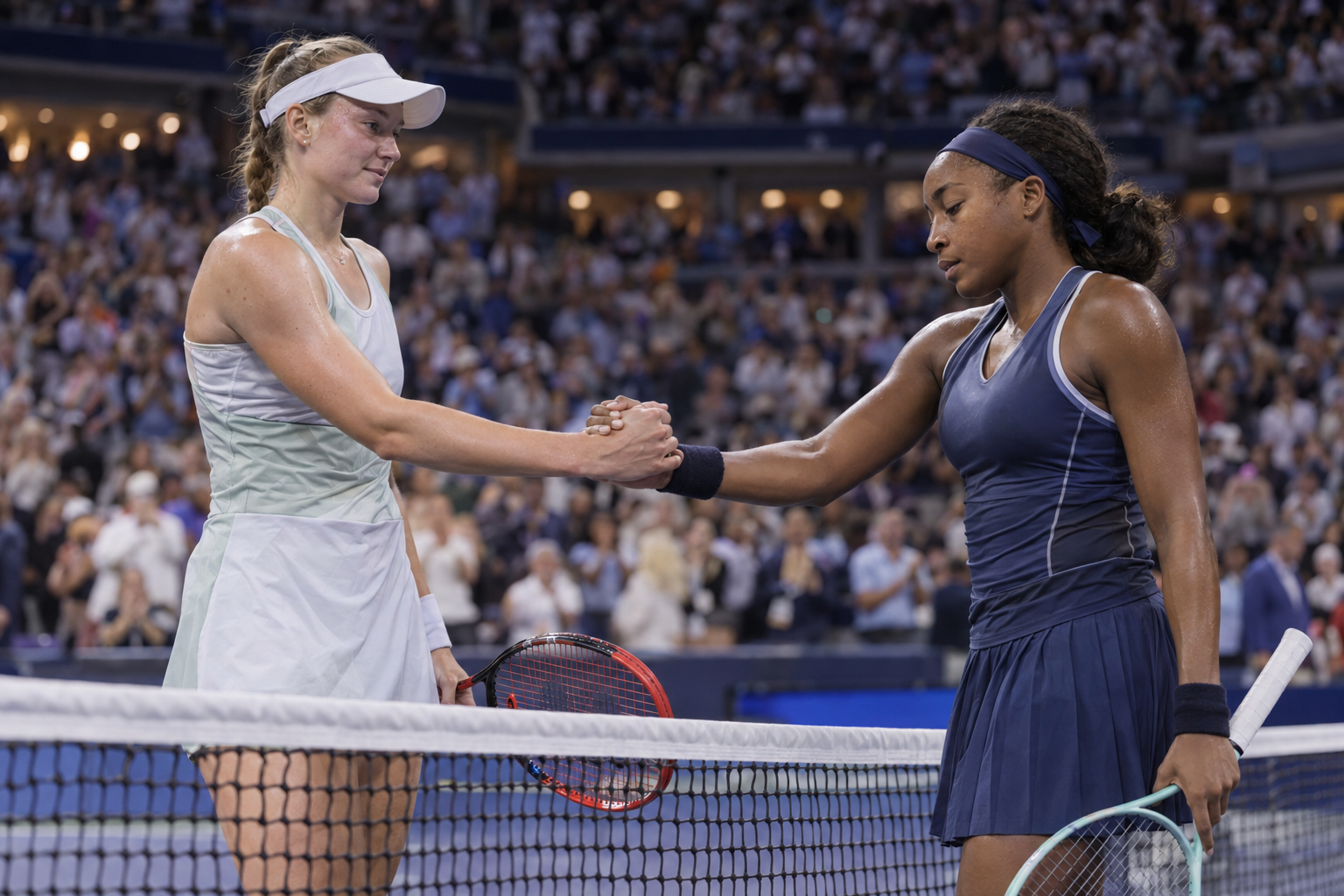
Coco Gauff did not lose this US Open semifinal because she lacked courage, ambition or the backing of New York. She lost because Elena Rybakina refused to be hurried by any of it. The new world No. 1 absorbed Gauff’s excellent opening set, quieted a stadium that wanted an American celebration and won 3-6, 6-4, 6-4. That scoreline describes a comeback. What it cannot quite capture is the authority of a player who seems most dangerous when the match begins to feel emotionally crowded.
Gauff started as if she intended to turn Arthur Ashe Stadium into an extension of her own nervous system. She defended with depth, redirected pace and made Rybakina strike one more ball than the Kazakhstani wanted. The sixth-game break was earned, and the first set belonged to Gauff on merit. For a while, Rybakina’s power looked less like a weapon than a demand she could not consistently meet. The crowd sensed vulnerability and leaned into every exchange.
Then came the part of Rybakina’s game that deserves more admiration than it usually receives. Her composure is often described as a personality trait, almost a piece of trivia beside the serve. In truth, it is a competitive skill. She did not chase a spectacular escape. She cleaned up the loose points, accepted that long rallies would be uncomfortable and waited for Gauff’s service games to become complicated. The match shifted without a theatrical announcement.
That is the difficult lesson for Gauff. At 22, she already owns a US Open title and has learned how to win when her tennis is untidy. Yet the very resilience that saves her so often can obscure a harsher requirement at the top of the sport: against an opponent of Rybakina’s quality, survival is not the same as control. A couple of service games in the final two sets were enough to decide the night. Gauff kept fighting, even breaking when Rybakina first served for the match, but the margin had become too narrow for another rescue.
The last game was especially cruel. After forcing her way back into the contest, Gauff could not hold, and an overhead drifted long on match point. It would be easy to package that miss as the whole defeat. It was not. The more useful reading is that Rybakina had spent two sets making each second serve, short forehand and neutral ball feel expensive. Pressure rarely arrives as one dramatic blow. More often, it accumulates until a routine shot carries the weight of the evening.
None of this should be mistaken for a verdict on Gauff’s ceiling. Her recent run, including a Cincinnati title and deep appearances at Wimbledon, Toronto and New York, suggests a player expanding her options rather than standing still. She also said she felt she played most of the tournament on her own terms. That assessment matters. The defeat hurt precisely because the performance was good enough to win, and because the flaws were specific enough to recognize.
Rybakina, meanwhile, advances to face Aryna Sabalenka in a final that feels like a contest for more than a trophy. Sabalenka brings open intensity, crushing returns and the confidence of a two-time defending champion. Rybakina brings the ranking Sabalenka is about to surrender and the memory of beating her in this year’s Australian Open final. Their rivalry offers a fascinating argument about power: one player broadcasts it, the other conceals it until the scoreboard makes the announcement.
I suspect the final will turn on whether Rybakina can improve the serve that wavered against Gauff. She won 76 percent of her first-serve points in the semifinal, but landed too few easy holds for comfort. Sabalenka will attack hesitation much earlier than Gauff did. Rybakina cannot rely on calm alone; serenity only matters when it protects aggressive choices. Her own post-match judgment was blunt: she needed to serve better and keep moving forward.
For American tennis, the empty place in the women’s final will sting. Gauff’s loss followed Jessica Pegula’s defeat to Sabalenka, leaving no American woman in a major final this year for the first time since 2006. Still, disappointment should not become melodrama. Gauff’s evening exposed a gap, not a collapse. She left New York knowing that her game can trouble the incoming No. 1 and knowing exactly where the contest escaped her.
That may be the most honest ending available. Rybakina earned the final by remaining herself under pressure, while Gauff discovered that brave resistance cannot replace clean execution at the decisive moments. One leaves with the No. 1 ranking and a chance to crown it immediately. The other leaves with hard evidence that she is close, plus the less comforting knowledge that close is where champions do their most demanding work.