


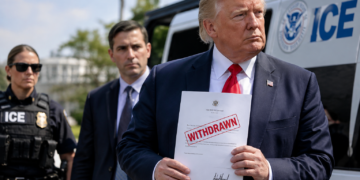



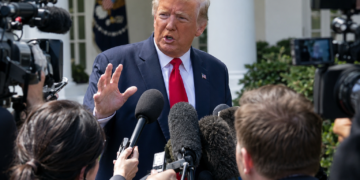

















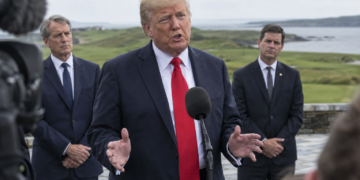


















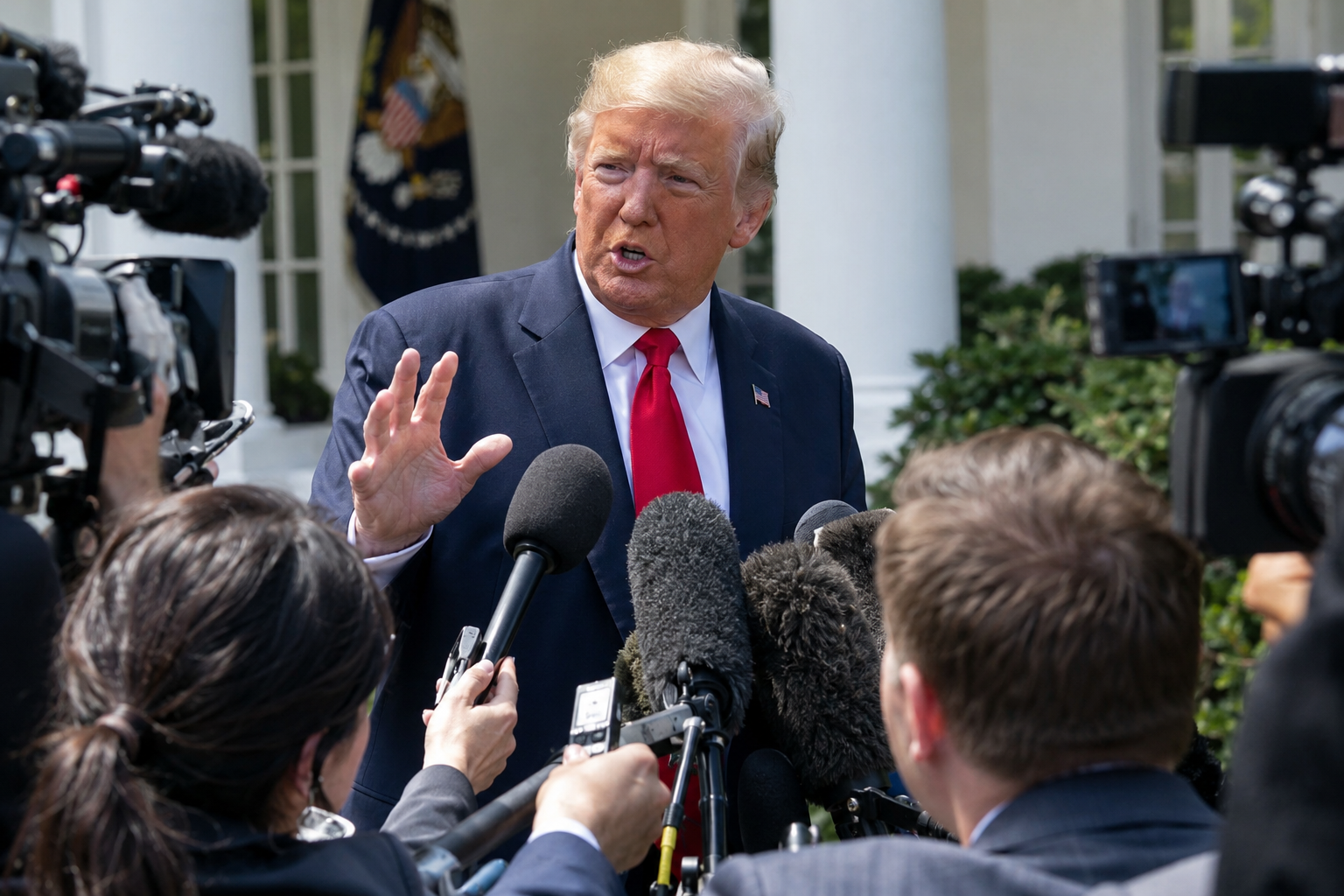
President Donald Trump said Friday that CNN, MS NOW and Politico were being banned from the White House, escalating a long-running conflict between his administration and news organizations whose coverage he has repeatedly criticized. Trump announced the move in a post on Truth Social, saying the outlets had engaged in what he called “FAKE NEWS” and accusing them of reporting “FICTION and LIES” about the president, his administration and the United States. He also suggested that other news organizations could face similar treatment.
The announcement immediately raised questions about what a ban would actually mean and whether the administration could legally enforce it. Trump did not publicly provide a detailed procedure for removing the organizations, explain whether reporters would lose credentials, or specify whether the outlets would be excluded from briefings, presidential events, travel pools or other forms of access. CNN’s White House team continued working at the complex after the announcement, according to Reuters, underscoring the gap between the president’s declaration and the practical steps required to implement it.
The dispute matters because access to the White House is not simply a matter of convenience for journalists. Reporters covering the president routinely rely on briefings, interviews, pool arrangements and access to official events to observe government activity and question senior officials. When access is restricted, news organizations can still report from outside the White House, but losing direct access can affect how quickly they can gather information and challenge official statements.
The legal questions are likely to be central to what happens next. The First Amendment protects freedom of speech and the press, while court decisions involving government access to journalists have addressed whether officials may exclude reporters because of the viewpoint expressed in their coverage. The Reporters Committee for Freedom of the Press said Friday that a ban based on unfavorable reporting would violate constitutional protections, while Reuters reported that legal challenges are expected.
Trump’s latest announcement also follows several earlier confrontations between his administration and the press. During his first presidency, CNN reporter Jim Acosta was temporarily barred from the White House before a federal judge ordered the administration to restore his access. Playboy correspondent Brian Karem also fought a White House credential suspension in court. Those episodes established a pattern in which disputes over presidential access moved beyond political arguments and into the judicial system.
In 2025, Trump also restricted Associated Press access to certain presidential events after the organization continued using “Gulf of Mexico” rather than the administration’s preferred “Gulf of America.” The AP challenged the restrictions in court, turning another dispute over presidential access and editorial language into a First Amendment case. The continuing litigation provides an important backdrop to the latest confrontation because it raises similar questions about whether government access can be conditioned on how a news organization reports or describes government policy.
For CNN, MS NOW and Politico, the immediate issue is operational as much as constitutional. Their journalists can continue reporting through public statements, congressional sources, interviews and other channels, but access to the president and senior officials is a valuable reporting tool. The White House, meanwhile, has increasingly emphasized its own ability to shape the press environment, including changes to how access and press-pool participation are managed.
The administration’s critics argue that excluding individual outlets can create a chilling effect well beyond the organizations named in the announcement. If journalists believe critical coverage could result in the loss of access, editors may have to weigh the professional value of aggressive reporting against the possibility of retaliation. Supporters of the president’s position are likely to emphasize the administration’s stated objection to inaccurate reporting and its interest in challenging what it regards as false or misleading coverage.
The broader consequence may therefore extend beyond the three organizations. White House press access has historically been an important part of the relationship between presidents and the American news media, even when relations have been hostile. The latest confrontation tests how far a president can go in controlling that relationship while remaining within constitutional limits. It also places greater responsibility on journalists to document their reporting carefully, distinguish verified facts from allegations and explain disagreements transparently.
For the public, the central question is not simply whether CNN, MS NOW or Politico can enter the White House. It is whether access to government officials can be used as a tool to reward favorable coverage or punish unfavorable reporting. The answer will depend partly on how the administration implements the announcement and partly on how courts respond if the affected organizations challenge it. Until those questions are resolved, Friday’s declaration remains both a significant political confrontation and a potentially consequential test of the boundaries between presidential authority and a free press.