











































STRASBOURG, France — Canada is moving toward a new and unusually close relationship with Europe as Prime Minister Mark Carney embraces a proposal that could make his country the European Union’s first associate member. The idea emerged this week as relations between Ottawa and Washington deteriorated further, turning what might once have seemed like a distant institutional experiment into a potentially important shift in Canada’s economic and strategic direction.
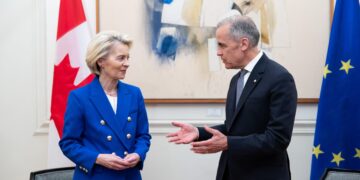
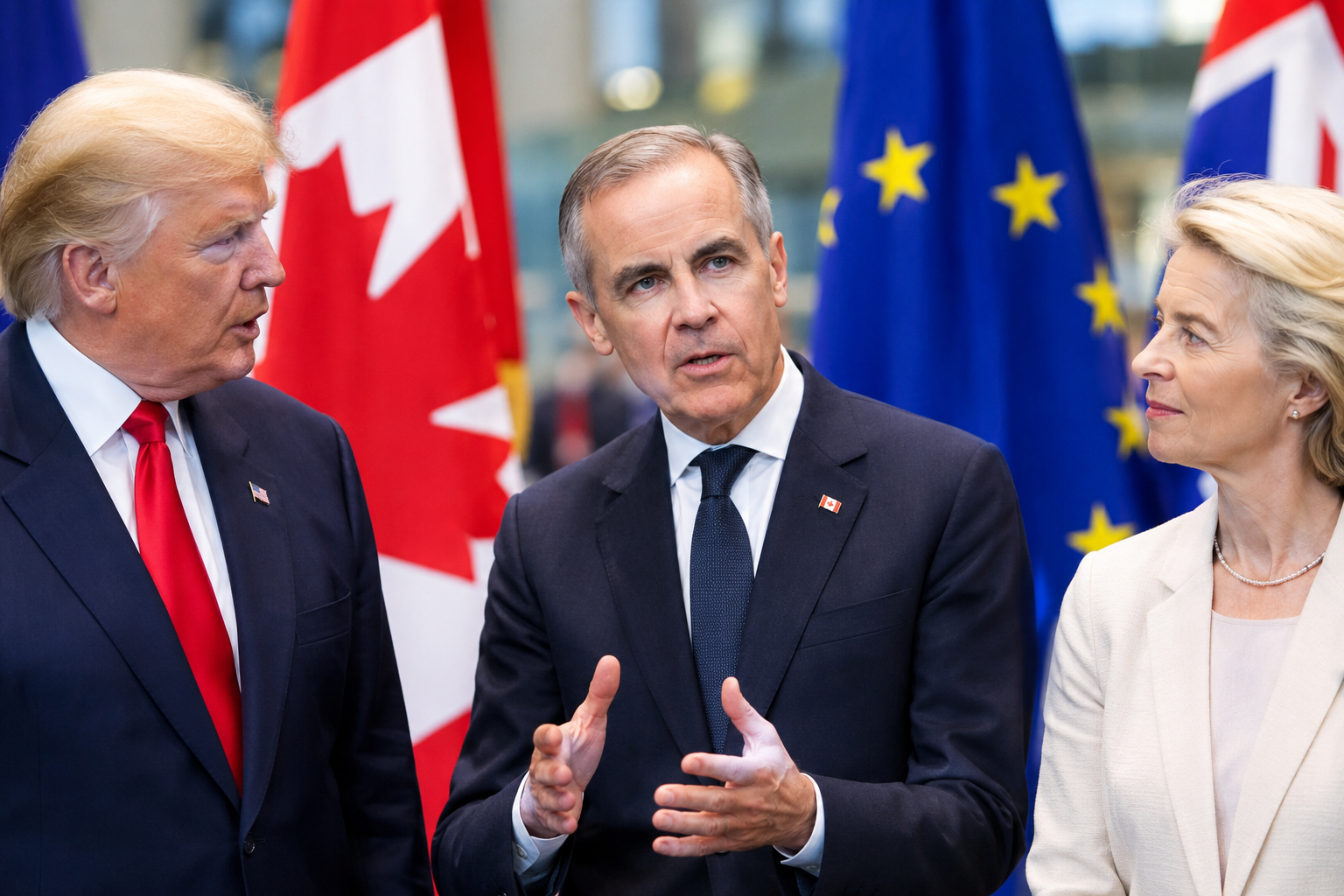
European Commission President Ursula von der Leyen proposed the associate-membership idea on Wednesday, presenting it as part of an “Alliance for the Future” that would take Canada-EU relations beyond their existing trade arrangements. The proposal has no established legal model inside the EU treaties, meaning its precise rights, obligations and access to European institutions and markets would still have to be negotiated.
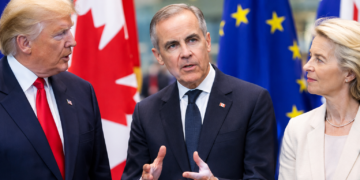
Carney, speaking to the European Parliament in Strasbourg on Thursday, welcomed the ambition while making clear that Canada is not seeking full EU membership. Instead, he described a deeper partnership built around trade, defence, critical minerals, energy, technology, research and financial services.
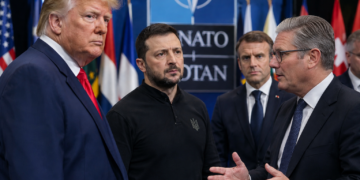
The timing is significant. Canada has long depended heavily on the United States, with roughly 70% of its exports going south of the border. That integration has brought enormous economic benefits, but it also leaves Canada exposed when Washington changes trade policy. Under President Donald Trump, tariffs, demands for concessions and repeated references to Canada becoming the “51st state” have pushed Ottawa to consider ways of reducing that vulnerability.
For Carney, Europe offers one possible answer: not replacing the United States, but adding another major economic and strategic pillar.
“We do not seek power to dominate others,” Carney told European lawmakers, arguing instead for resilience so that no single country could control Canadian markets or undermine its sovereignty. His government has increasingly framed diversification as a matter of national security as well as economics.
The European offer builds on cooperation that is already substantial. Canada and the EU have the Comprehensive Economic and Trade Agreement, or CETA, which provides broad preferential access between the two markets. The two sides have also expanded cooperation in defence, energy and critical minerals. Earlier this year, Canada became the first non-European country to join the EU’s SAFE defence procurement initiative, opening opportunities for Canadian companies as European governments increase defence spending.
The proposed next step would go much further. Carney has called for closer integration in areas including artificial intelligence, advanced computing, space, digital trade, energy security, payments and defence production. He has also raised the possibility of stronger educational and research links, including participation in European programmes that could allow Canadian students and researchers to work more closely with their European counterparts.
Such cooperation could create new opportunities for Canadian industries. Critical minerals are particularly important because Europe wants to reduce vulnerabilities in strategic supply chains, while Canada possesses significant mineral resources. Energy could offer another bridge, with Canada seeking markets for resources and Europe seeking reliable supplies. Defence cooperation could also give Canadian manufacturers access to a larger industrial network while helping Europe expand production capacity.
But the proposal also carries risks.
The first is the reaction from Washington. Trump has already suggested that an EU-Canada associate arrangement could be a hostile act and threatened serious tariffs against Europe if he judged the initiative to have unfriendly intentions. Any escalation could therefore turn Canada’s diversification strategy into another source of pressure on both sides of the Atlantic.
There is also a practical question about what “associate membership” would actually mean. Unlike full EU membership, it would presumably allow Canada to deepen integration without accepting the complete obligations of joining the bloc. Yet the EU has never had such a category, so negotiators would have to design an entirely new framework. Issues surrounding market access, regulatory alignment, movement of people, financial services and dispute settlement could become complicated.
Canada must also consider whether European markets can realistically compensate for reduced dependence on the United States. Geography remains a powerful economic factor. The Canadian and American economies are deeply intertwined through supply chains, transportation networks, energy infrastructure and decades of commercial integration. Diversification can reduce concentration risk, but it cannot quickly erase those connections.
For Europe, the relationship also presents both opportunity and responsibility. Canada brings energy, natural resources, Arctic geography, technological expertise and a major economy outside the EU. A closer partnership could strengthen Europe’s access to strategic resources and give the bloc another important partner at a time when its relationship with Washington is increasingly uncertain.
The consequences may extend beyond trade. A successful Canada-EU arrangement could become a model for cooperation between the EU and other closely aligned countries that want deeper integration without full membership. It could also strengthen the influence of middle powers seeking greater room to maneuver between larger geopolitical blocs.
The next major test will come at the Canada-EU summit scheduled for Montreal on October 29 and 30. There, leaders are expected to begin giving substance to the broad political vision announced in Strasbourg.
For Canada, the debate is ultimately about how much economic and strategic independence can be built without abandoning its historic relationship with the United States. For Europe, it is about whether a new partnership can be constructed quickly enough to match a rapidly changing global economy.
What began as an answer to pressure from Washington may therefore become something larger: an attempt by Canada and Europe to build a relationship based not simply on shared values, but on shared industrial capacity, resources, technology and security. The details remain uncertain, but the direction is becoming clearer. Canada is looking across the Atlantic not as a substitute for its closest neighbour, but as a way to ensure that its future is not dependent on one relationship alone.