


































Russia’s war against Ukraine is entering a harsher stage, one in which the battlefield is no longer the only arena of confrontation. The conflict is increasingly reaching deep into cities, energy systems, transport networks, economies and public psychology. Recent waves of missile and drone attacks, alongside Ukrainian strikes on Russian military and energy infrastructure, show a war becoming broader, more industrial and more difficult to contain.
The phrase “total war” carries a heavy historical meaning. It describes a conflict in which governments mobilize not only armies, but also factories, finances, technology, propaganda and civilian life. Russia has not formally declared total war, yet the direction of the conflict increasingly resembles that model. Military production is central to economic planning, civilian infrastructure is treated as a strategic target, and political institutions are being organized around the continuation of the invasion.
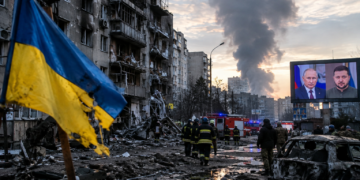
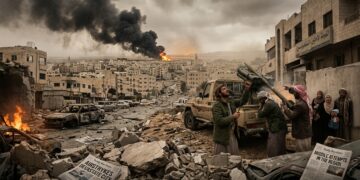
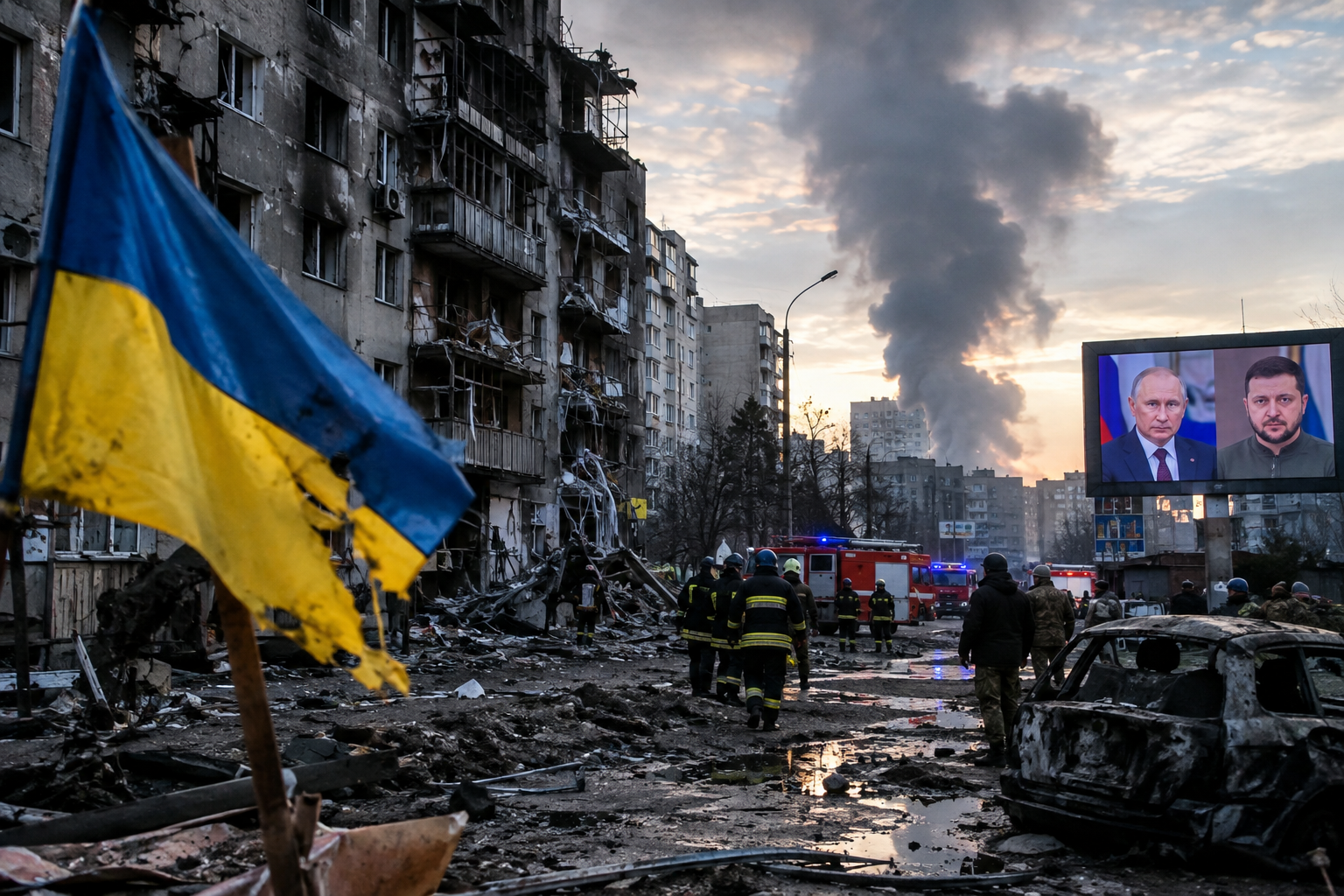
The most visible sign is the intensification of the air campaign. Russian forces have expanded the use of drones, cruise missiles, ballistic weapons and glide bombs against Ukrainian cities and infrastructure. Reports of strikes on Kyiv, Odesa, Zaporizhzhia and other regions underline the growing pressure on civilians. The damage is not measured only in destroyed buildings. It is also counted in interrupted electricity, damaged railways, disrupted water supplies, closed businesses and families forced to live around air-raid sirens.
Russia’s adaptation of older or less expensive weapons for combat illustrates another feature of this new phase: endurance through quantity. The use of repurposed training missiles and mass-produced drones suggests a strategy designed to exhaust Ukrainian air defenses as much as to destroy individual targets. If defenders must use costly interceptors against waves of cheaper weapons, the conflict becomes a contest of industrial capacity and financial stamina.
Ukraine, however, is not simply absorbing the attacks. Its forces have increasingly carried the war into Russian territory, striking refineries, military airfields, ports and logistics facilities. These operations aim to weaken the machinery sustaining the invasion and to demonstrate that distance no longer guarantees safety. The result is a widening security zone in which fuel supplies, transport corridors and military installations are vulnerable on both sides of the border.
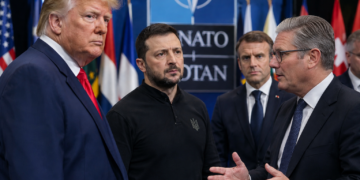
This escalation carries a serious risk of miscalculation. European governments are watching drone incursions, attacks near borders and threats against countries supporting Kyiv. Poland has warned that hybrid attacks or deliberately ambiguous incidents could be used to test NATO solidarity. Even when an incident does not trigger direct military intervention, it can increase public fear, raise defense spending and make diplomacy more difficult.
Inside Russia, the war is also reshaping the relationship between state and society. The Kremlin presents military sacrifice as a test of national unity, while dissent is increasingly constrained. Parliamentary elections taking place amid the conflict have been framed by the authorities as evidence of public support, although independent opposition voices have faced exclusion, imprisonment or exile. The political effect is a narrowing of the space in which citizens can openly question the war’s cost or direction.
Yet economic stability should not be confused with economic health. Russia’s defense industries continue to create jobs and sustain production, but military spending is also widening fiscal pressure, increasing borrowing costs and deepening labor shortages. High energy revenues can provide temporary relief, but they do not erase the longer-term problems created by sanctions, restricted technology access, reduced investment and dependence on wartime demand.
For Ukraine, the consequences are more immediate and personal. Repeated attacks threaten the coming winter, when damaged energy infrastructure can turn ordinary cold into a humanitarian emergency. Hospitals, schools and local authorities must prepare for outages while millions of people continue to face displacement, trauma and uncertainty. The longer the war lasts, the harder it becomes to restore homes, rebuild communities and persuade families that returning is safe.
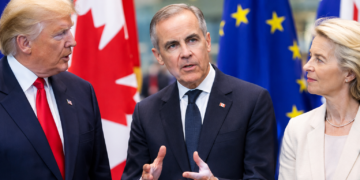
The international consequences are equally broad. Europe is being pushed toward larger defense budgets, expanded weapons production and new approaches to counter-drone warfare. Diplomacy remains possible, but negotiations are weakened when each side believes that additional pressure may improve its position. A conflict that once appeared concentrated in eastern Ukraine is now affecting global energy markets, shipping routes, food security and the credibility of international borders.
The danger of this new phase is not only that the war may become more destructive. It is that destruction itself may become the organizing principle of policy. When military success is measured by the ability to outlast the opponent’s infrastructure, economy and public morale, civilians become central to the contest even when they are not the declared target.
Ending such a war will require more than a temporary pause in missile launches. It will require credible security arrangements, protection for civilians, accountability for violations and a political process capable of addressing territory, sovereignty and reconstruction. Until then, Russia’s expanding war machine and Ukraine’s increasingly distant strikes are creating a conflict with fewer clear boundaries—and with consequences that reach far beyond the front line.