












































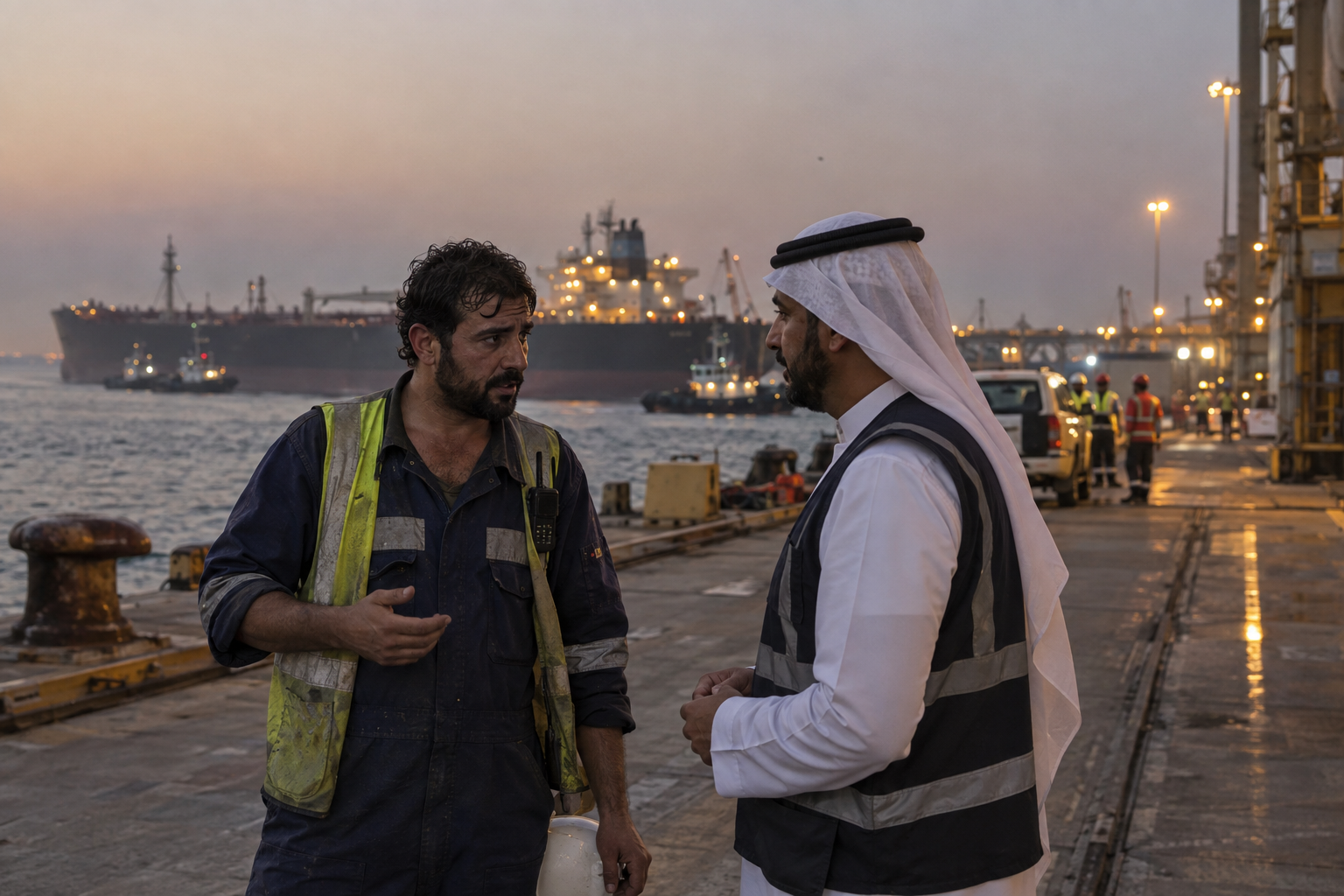
A projectile strike on a vessel in the Strait of Hormuz and fresh attacks inside Saudi Arabia have turned a tense energy crisis into a test of how many shocks the global oil system can absorb at once. The weekend incidents hit both the Gulf’s main maritime exit and the overland route Saudi Arabia has relied on to bypass it, leaving traders to price a conflict that is spreading across waterways, borders and infrastructure.
Britain’s maritime security agency said a vessel was struck while passing through Hormuz, sparking a fire and forcing the crew to evacuate. Iran separately reported that an Iranian commercial ship was hit off its coast, killing one person and wounding four crew members. The incidents followed a drone attack that shut Saudi Arabia’s 1,200-kilometre East-West pipeline, the desert artery carrying crude to the Red Sea port of Yanbu.
That pipeline had become the kingdom’s insurance policy during six months of restricted traffic through Hormuz. Roughly 4 million barrels a day, equal to about 4% of global supply, had been redirected westward. Saudi buyers and traders told Reuters that stocks at Yanbu could sustain exports for only five to seven days if pumping does not resume. Estimates for repairs range from days to several weeks, and Riyadh has not disclosed the full damage.
The timing magnifies the threat. Houthi forces have captured Perim Island in the Bab el-Mandeb strait, the narrow entrance to the Red Sea. Oil diverted away from Hormuz must now approach a second contested passage. The result is an unusual two-gate squeeze: risk is rising at both ends of the route designed to protect Saudi exports from disruption in the Gulf.
Markets were already thin on reassurance. Brent crude climbed above $100 a barrel last week for the first time since July, while US retail diesel rose beyond $6.20 a gallon. Tanker rates from the Gulf of Oman to China also reached record levels, adding roughly $11.50 a barrel on one major route. Those costs move quickly beyond trading screens, feeding freight bills, food prices, manufacturing expenses and pressure on central banks.
The physical losses are severe enough without another outage. Saudi Arabia told OPEC that its production fell to 6.2 million barrels a day in August, down from 10.9 million before the war began in February. Industry sources estimate flows through Hormuz at only 6 million to 9 million barrels a day, far below the region’s prewar volumes. Emergency reserves have softened earlier blows, but repeated releases leave less protection against a prolonged interruption.
Diplomacy, meanwhile, is struggling to keep pace with the military map. A meeting in Oman involving Iran and Gulf governments was postponed in what Oman’s foreign minister described as an effort to preserve consensus. Iranian officials had been expected to discuss future shipping arrangements, yet Tehran has said Hormuz will not fully reopen without concessions from Washington. Every delay gives insurers, shipowners and refiners another reason to plan for scarcity rather than a quick return to normal trade.
Washington also faces a narrowing set of choices. Three sources told Reuters that Saudi Crown Prince Mohammed bin Salman sought US military help against the Houthis and received an offer of intelligence support instead. A wider intervention might defend an ally and shipping lanes, but it could open another front. Limited action, however, risks convincing Gulf governments that American protection no longer matches the reach of the threats confronting them.
The deeper change is psychological as much as logistical. Energy markets once treated a Hormuz closure as the extreme scenario and Saudi Arabia’s western pipeline as the answer. The latest attacks challenge both assumptions simultaneously. Storage can bridge a short repair, naval escorts can reduce some maritime risk, and negotiations may still reopen channels. None of those measures is a complete substitute for reliable passage through both straits and an operating cross-country pipeline.
For consumers, the danger is not simply another dramatic jump in crude. It is a longer period of expensive uncertainty in which every drone alert, repair estimate and postponed meeting carries a price. If the Saudi line returns quickly, the immediate supply loss may be contained. If it remains shut while attacks continue around Hormuz and Bab el-Mandeb, the disruption could move from a regional emergency to a sustained global energy shock.