

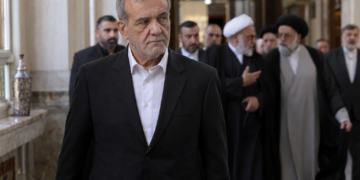































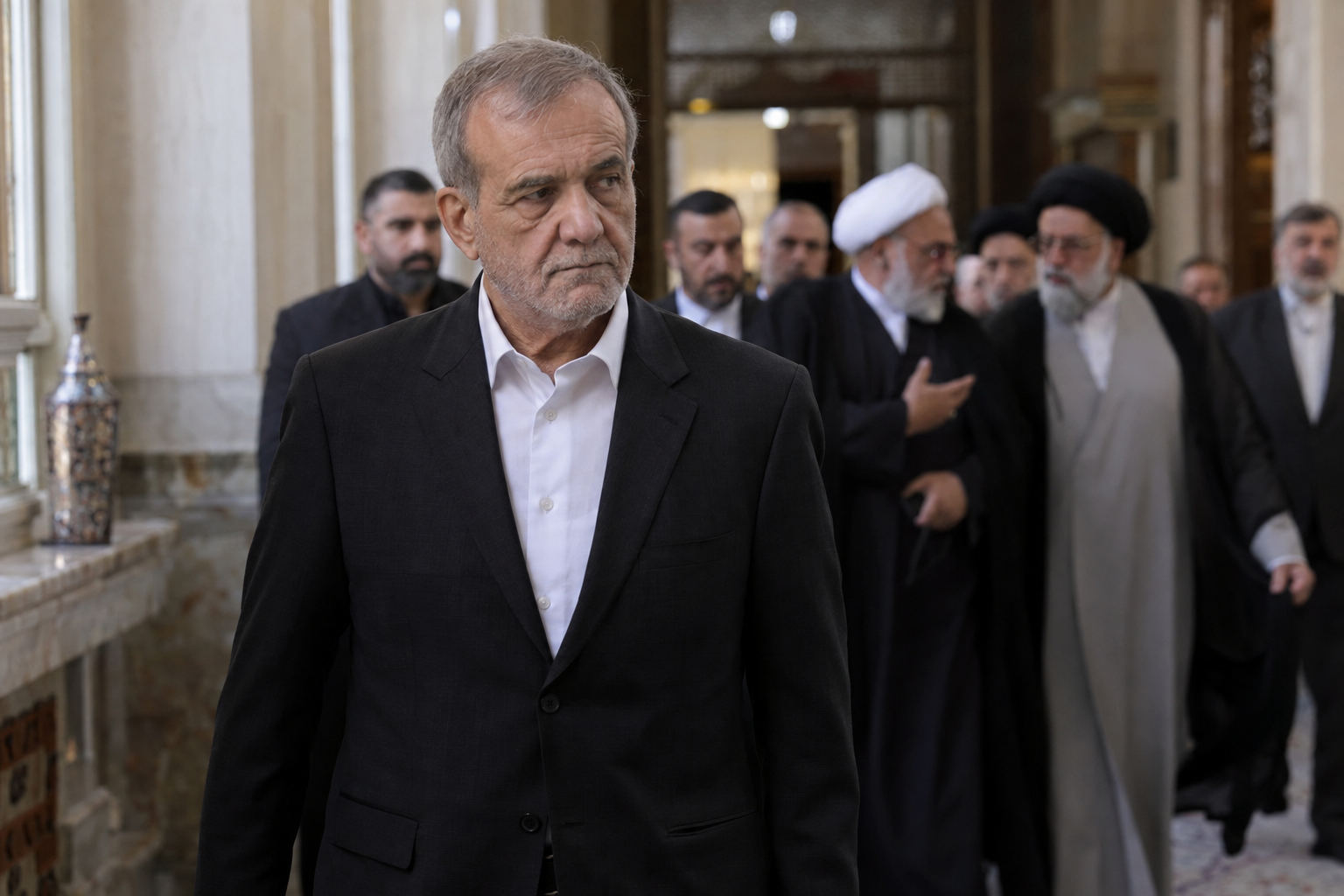
Iranian President Masoud Pezeshkian became the public face of a truce challenged by harder-line power centers.
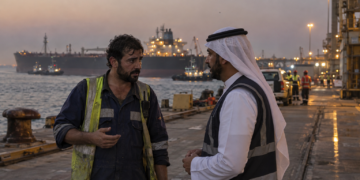
For three weeks, Iran’s president could point to a document and argue that diplomacy had stopped a ruinous war. The June 17 memorandum with the United States reopened the Strait of Hormuz, eased some pressure on Iranian oil sales and created a 60-day runway for a permanent settlement. Then three commercial ships were struck in the waterway, one of them a Qatari liquefied-gas tanker that caught fire. The truce collapsed almost overnight.
The public story was familiar: Tehran accused Washington of violating the agreement, while the United States blamed Iran for attacking civilian shipping. A more unsettling account has now emerged from inside the Iranian system. The New York Times, citing three Iranian officials, reported that an official investigation traced the July attacks to a hard-line network led by Hossein Taeb, the cleric and former intelligence chief who now commands the Basij paramilitary force. Iran has not formally accepted responsibility for the strikes, and the account rests on unnamed officials. Yet it fits the political struggle that had been visible from the moment the deal was announced.
President Masoud Pezeshkian had sold the memorandum as a practical rescue. Iran’s economy was buckling under war and sanctions, commercial traffic had nearly vanished from Hormuz, and the prospect of a broader regional conflict was growing. The agreement promised immediate relief while postponing the hardest questions, including Iran’s nuclear program, the long-term management of the strait and the role of Iranian-backed forces in Lebanon.
That postponement created an opening for the deal’s enemies. Hard-line lawmakers, clerics and media figures denounced the text as surrender. They argued that reopening Hormuz would discard Iran’s strongest bargaining tool before Washington delivered sanctions relief, compensation or security guarantees. Their criticism was more than ideological theater. In Iran’s divided state, elected officials can negotiate policy, but armed institutions retain the means to overturn it.
The memorandum’s vague language made that imbalance dangerous. It required Iran to use its “best efforts” to secure commercial passage without charge for 60 days. Tehran read the clause as recognition that it could manage shipping routes. Washington and Gulf governments read it as a promise of free navigation. Each side claimed the text supported its position, leaving commanders at sea to enforce a political interpretation that diplomats had never settled.
According to the reported internal account, Pezeshkian returned to Tehran after the ship attacks and demanded answers from Revolutionary Guard commander Ahmad Vahidi, who denied authorizing them or knowing about them beforehand. Iranian intermediaries later told Washington that rogue operators were responsible. If accurate, the episode reveals a government unable to guarantee its own commitments. It also shows why the hard-liners did not need to defeat the agreement in parliament. A limited operation in the world’s most sensitive oil corridor could force Washington to do the demolition for them.
That is what followed. The United States struck dozens of Iranian targets and revoked a temporary oil-export waiver, one of Tehran’s few immediate gains. Iran retaliated against American facilities in Bahrain and Kuwait. The cycle strengthened every faction that had warned compromise would invite attack. By July 13, the memorandum was in crisis, and the promised negotiations on a lasting settlement had no date.
The hard-liners also benefited from uncertainty at the top. Supreme Leader Mojtaba Khamenei had not appeared publicly after reportedly being wounded early in the war. Written messages attributed to him criticized the deal, but Iranian officials cited by the Times questioned whether all of those instructions were authentic. In that vacuum, actors with access to weapons, intelligence networks and state media could claim the mantle of resistance while the president carried responsibility for failure.
None of this absolves Washington. The agreement was fragile because it avoided precise rules for Hormuz, tied economic relief to disputed performance, and depended on restraint by Israel and Iranian-aligned groups beyond the two signatories’ direct control. American retaliation transformed a suspected internal sabotage operation into renewed interstate conflict. The collapse was therefore enabled by flawed drafting and mutual distrust, even if Iranian hard-liners supplied the spark.
Their victory is also narrower than it appears. They prevented Pezeshkian from proving that engagement with Washington could deliver durable gains. They did not solve Iran’s sanctions crisis, secure international acceptance of its control over Hormuz or end the war. Instead, they restored the political order they know best: permanent emergency, opaque authority and negotiation conducted under fire. Any future U.S. deal will have to address that reality. A signature from Iran’s civilian government is meaningful only if the armed state behind it is both represented and constrained.