




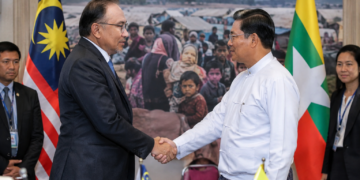































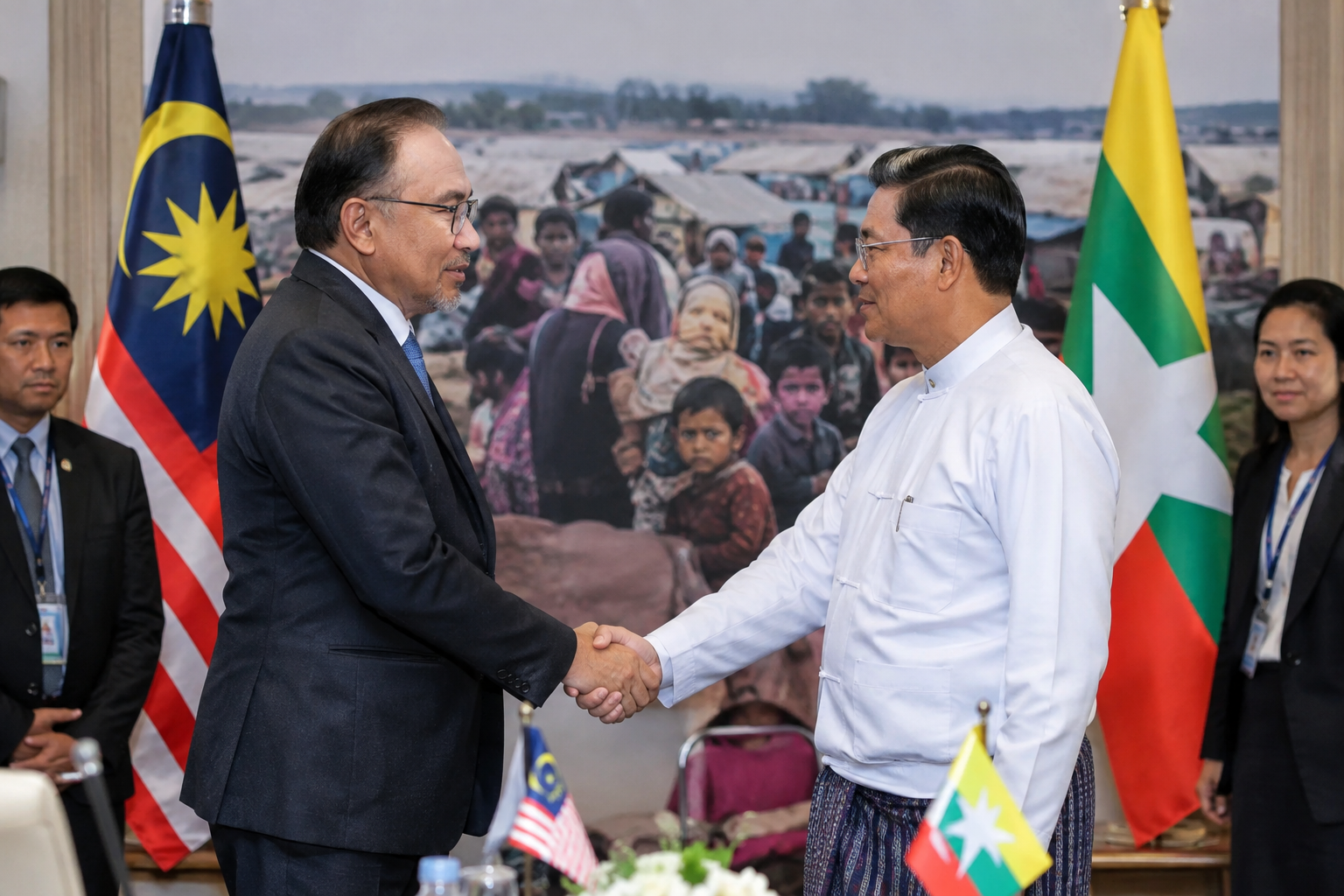
Malaysia is preparing for a new and delicate round of diplomacy with Myanmar over the return of Rohingya refugees, with Prime Minister Anwar Ibrahim saying he plans to invite Myanmar’s President Min Aung Hlaing to Malaysia for talks. The initiative comes as Kuala Lumpur seeks a practical answer to a refugee issue that has stretched across years of war, displacement and political deadlock.
Anwar said on Sept. 16 that he wanted direct engagement with Myanmar’s leadership because Malaysia cannot resolve the repatriation question on its own. He said Myanmar had agreed to receive 5,000 people as an initial step, while a larger process could take place gradually rather than attempting to return a population of roughly 200,000 Myanmar nationals in Malaysia at once. Malaysian officials have also described the first phase as voluntary, with about 1,500 people expected to be involved.
The proposed talks carry significance beyond the numbers. Malaysia is trying to balance several competing pressures: the humanitarian needs of refugees, concerns expressed by parts of the Malaysian public, the cost and administration of immigration detention, and the security implications of irregular migration. Anwar has argued that diplomatic engagement is more likely to produce a workable solution than repeated criticism of Myanmar without an agreement on what happens to people who cannot safely remain in Malaysia.
Yet the Rohingya question is fundamentally different from a routine migrant-return programme. Many Rohingya fled persecution and violence in Myanmar and have historically faced severe restrictions on citizenship and rights there. Malaysia’s own government has acknowledged that any return must be examined for safety. Government spokesman Fahmi Fadzil said in August that Malaysia would not send people back if they faced persecution or a threat to their lives. Officials have also said discussions with Myanmar must address security and access to medical care.
That condition is central because Myanmar remains affected by armed conflict. The United Nations refugee agency has said it is not participating in Malaysia’s planned repatriation programme and has warned that conditions in Myanmar remain unsafe because of continuing violence. UNHCR has stressed that returns should be voluntary, informed, safe and dignified, while international refugee-protection principles prohibit returning people to places where they face serious risks to their lives or fundamental rights.
The scale of the challenge is substantial. UNHCR figures at the end of February 2026 recorded about 215,600 refugees and asylum-seekers registered in Malaysia. Of them, roughly 193,824 were from Myanmar, including about 126,144 Rohingya. These figures do not necessarily capture every person living outside the registration system, meaning the practical population affected by policy decisions can be difficult to measure precisely.
For the Rohingya themselves, the proposed process raises questions that cannot be answered only through diplomatic agreements between governments. A voluntary return requires people to have enough reliable information about conditions in their place of return to make a genuine decision. It also raises questions about housing, documentation, livelihoods, education, healthcare, freedom of movement and protection from renewed violence. Without credible guarantees and monitoring, a return agreement could leave refugees uncertain about whether they are going home to safety or simply moving from one form of insecurity to another.
Malaysia also faces a diplomatic dilemma. Kuala Lumpur has followed the broader ASEAN position of avoiding formal recognition of Myanmar’s military authorities, while simultaneously arguing that meaningful engagement is necessary to address the refugee crisis. An invitation to Min Aung Hlaing would therefore place practical diplomacy alongside questions about how much political engagement with Myanmar is required to secure humanitarian outcomes. Anwar has framed the approach as engagement for a specific purpose: persuading Myanmar to accept responsibility for its nationals.
The talks could also test ASEAN’s ability to deal with a crisis that crosses borders. Rohingya displacement has affected Bangladesh, Malaysia, Indonesia, Thailand and other countries, while the conflict inside Myanmar continues to generate new humanitarian needs. A bilateral Malaysian-Myanmar arrangement may address only one part of the problem unless it is connected to wider regional efforts involving humanitarian access, protection and conditions in Rakhine State.
The consequences will depend heavily on what happens after the first returns, not simply on whether the first group leaves Malaysia. If people return safely and are able to rebuild their lives, the process could become a model for a larger voluntary programme. If safety, documentation or basic services fail, confidence in future returns could collapse quickly. The first phase will therefore carry an importance far beyond its relatively small number of participants.
Malaysia’s proposed talks represent an attempt to move a long-running refugee crisis from political statements toward a negotiated process. But the central test will be whether diplomacy can produce conditions in which return is genuinely voluntary and sustainable. For the Rohingya, the difference between repatriation on paper and a safe return in reality will be measured not by announcements in Kuala Lumpur, but by what awaits them when they cross the border back into Myanmar.