





































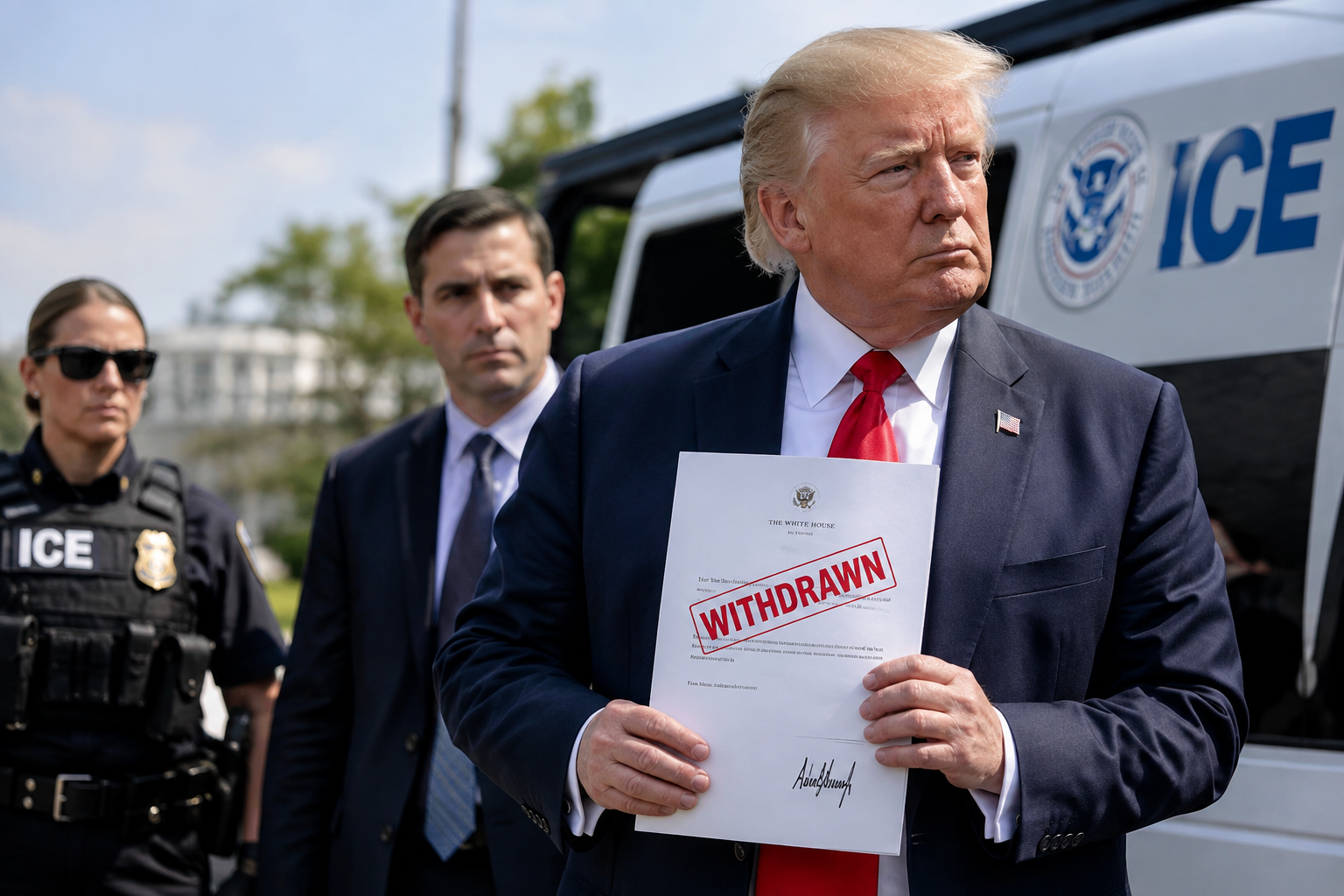
The Trump administration has withdrawn Lance Schroyer’s nomination to lead U.S. Immigration and Customs Enforcement, leaving one of the most important agencies in the president’s immigration program without a Senate-confirmed director and opening a new question over who will ultimately steer its expanding enforcement operation.
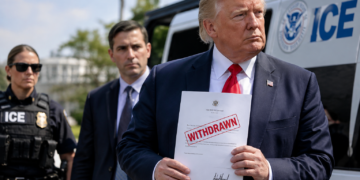
The White House announced the withdrawal Thursday without giving a reason. Schroyer, a former Oklahoma Highway Patrol major and Marine, had been selected by President Donald Trump in June. At the time, Trump portrayed him as an experienced law-enforcement figure who could help carry out the administration’s pledge to intensify arrests and deportations.
The nomination never reached a confirmation hearing. Republican Sen. Rand Paul of Kentucky, chairman of the Senate Homeland Security and Governmental Affairs Committee, had held up the process while seeking additional information about investigations involving immigration agents, including shootings in Minnesota. The stalled nomination ultimately disappeared from the Senate’s path.
Schroyer’s withdrawal matters because ICE is not a peripheral part of the administration’s immigration strategy. The agency is responsible for immigration arrests, detention and removals inside the United States, as well as major criminal investigations. Its role has grown particularly prominent during Trump’s second term as the administration has expanded efforts to locate and deport people living in the country without legal status.
Recent enforcement figures illustrate the scale. Reuters reported that ICE arrests reached nearly 51,000 in August, the third consecutive monthly record, even as deportations remained around 1,200 per day. The difference between arrests and removals reflects the complicated legal and logistical process that follows an immigration arrest, including asylum claims, pending immigration cases, court proceedings and limited deportation capacity.
That growing operation now continues under acting leadership. David Venturella is currently performing the duties of ICE director after Todd Lyons left the position earlier this year. The agency has not had a Senate-confirmed director since the Obama administration era, meaning the withdrawal extends a long-running period in which ICE has been led by acting officials.
The choice of Schroyer had already attracted attention because his professional background was rooted more heavily in state law enforcement than in federal immigration administration. He had worked as a senior adviser to Homeland Security Secretary Markwayne Mullin and had helped Oklahoma authorities train state troopers to cooperate with ICE enforcement. The administration presented that experience as evidence of his ability to manage large-scale enforcement.
Critics questioned whether that background was sufficient for an agency with a multibillion-dollar budget, thousands of employees and responsibility for highly complex federal immigration and criminal investigations. The absence of a confirmation hearing meant those questions were never fully tested through the normal Senate process.
The withdrawal also exposes the institutional difficulty of placing a permanent leader at the center of an increasingly consequential immigration campaign. A Senate-confirmed director could provide the agency with a clearer line of accountability and a durable public mandate. An acting director can exercise substantial authority, but continued reliance on temporary leadership can make long-term management and oversight more complicated.
For the administration, the immediate consequence is practical rather than simply symbolic. ICE must continue conducting arrests, detention operations, investigations and removals while the White House searches for another nominee. The next choice could reveal whether Trump wants a candidate whose primary credentials are operational law enforcement, federal immigration experience, management expertise or some combination of those qualifications.
The episode also highlights tensions within the broader immigration enforcement apparatus. The administration has promised aggressive action while facing questions from lawmakers and civil-liberties groups over the methods used by federal agents. Those disputes have intensified as arrests have expanded and as individual operations have generated lawsuits, protests and demands for greater transparency.
For communities affected by immigration enforcement, the leadership question has direct consequences. ICE decisions can determine where enforcement resources are concentrated, how local law-enforcement partnerships operate and how the agency balances people with criminal convictions against immigrants without criminal records. Reuters reported that more than three-quarters of recent ICE arrests involved people without criminal records, underscoring the breadth of the current enforcement strategy.
For Congress, the withdrawal provides another test of how much scrutiny lawmakers intend to apply to an agency operating at the heart of the administration’s domestic agenda. For the White House, it creates an opportunity to select a nominee capable of navigating both the operational demands of ICE and the increasingly difficult confirmation environment.
The larger question is whether the next nominee can secure the Senate support that Schroyer could not. Until that happens, ICE will remain under acting leadership while carrying out one of the most expansive immigration enforcement programs in modern American history. The withdrawal therefore changes the person at the center of the confirmation debate, but not the much larger debate over how the United States should enforce its immigration laws.