


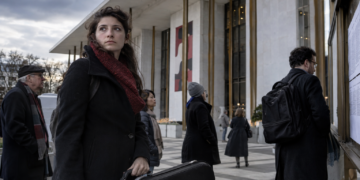






































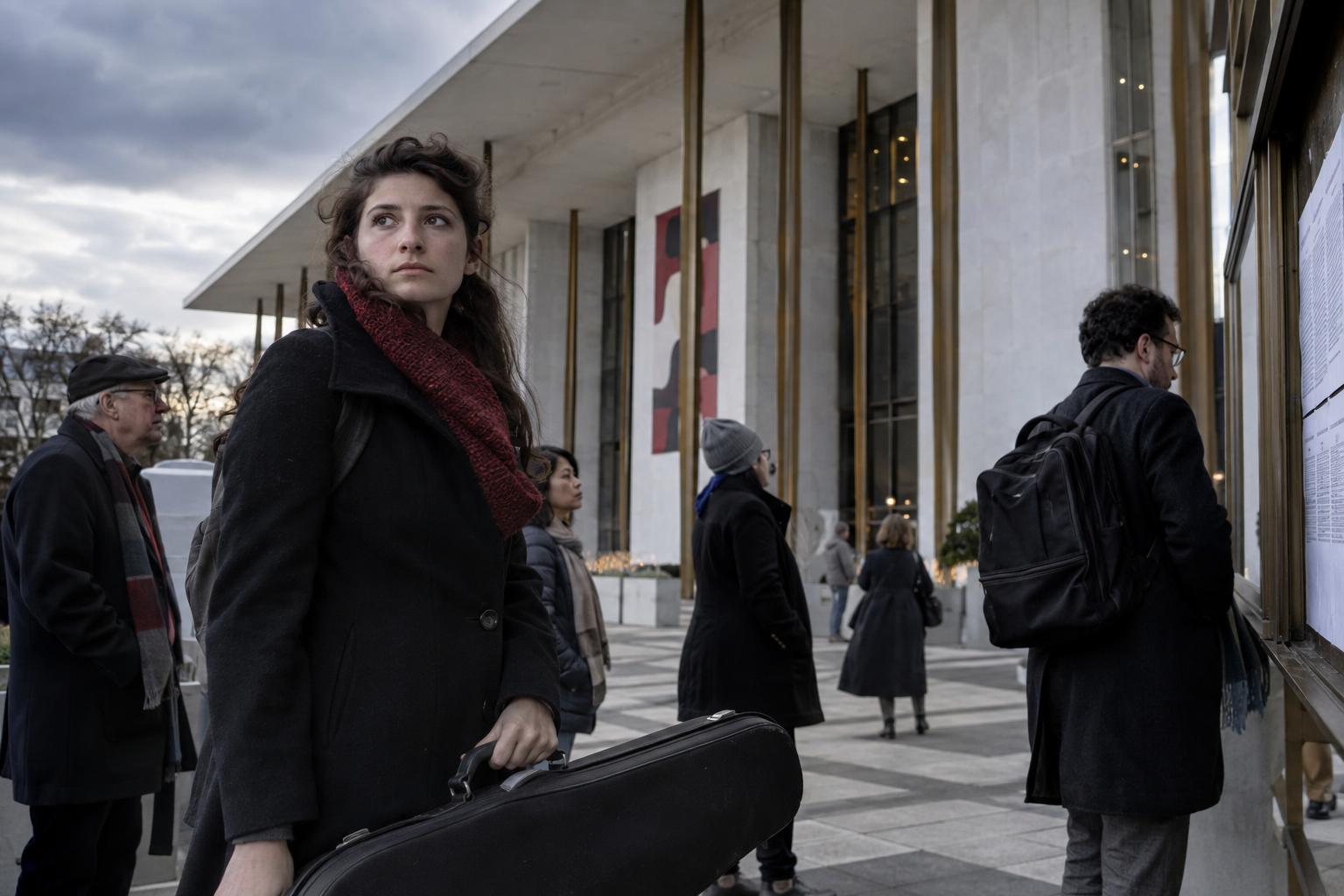
Workers and patrons confront uncertainty outside the Kennedy Center as trustees weigh an immediate shutdown.
The Kennedy Center may be days from going dark, not because a season has ended, but because two emergencies have converged inside Washington’s most prominent performing-arts institution. Board members are expected to meet Tuesday to consider an immediate closure of the main building, while managers warn that the center could soon lack enough cash to cover payroll and ordinary maintenance.
The warnings appear in a 57-page package prepared for the center’s trustees and obtained by The Washington Post. The documents describe an institution squeezed between failing finances and newly identified hazards in the building. They also make an extraordinary argument: President Donald Trump’s continued involvement in fundraising may depend on publicly recognizing him on the center’s exterior.
One proposed resolution says Trump has offered to help raise the money required to keep the center out of bankruptcy during a major renovation. Yet the presentation suggests he is unlikely to oversee that work or lead a rescue campaign without visible credit. Trustees were given 10 possible inscriptions, including language linking Trump and a dedicated fund to the renovation, restoration and future endowment of the center.
That proposal deepens a legal and political fight that has already reshaped the national arts complex. A Trump-aligned board previously approved adding the president’s name to the building. U.S. District Judge Christopher Cooper ruled in May that Congress created the Kennedy Center’s name and that the board could not change it on its own. A renewed effort to place Trump-related wording on the facade remains under court review.
The financial numbers explain the urgency, though not every cause. Earlier internal forecasts showed that the center expected to bring in roughly $124 million during a fiscal year in which it had budgeted $220 million in revenue. Even after sharp spending reductions, officials projected a deficit of about $23 million. Center leaders blamed past management and deferred problems; critics have pointed to falling ticket sales, donor unease and artistic cancellations during the current leadership’s tenure.
The latest package moves beyond a difficult budget and describes the possibility of missed payroll and unpaid maintenance bills within weeks. That prospect would threaten far more than performances. A complex of this size depends on security, engineers, stage crews, electricians and other workers whose daily labor keeps audiences safe. Bankruptcy, even if used to reorganize rather than liquidate, would introduce uncertainty across contracts, employment and future programming.
The building itself now supplies a second countdown. During a severe storm on Sept. 4, a section of ceiling plaster measuring about four by five feet fell roughly 60 feet into the Grand Foyer near the Concert Hall entrance. No one was injured. Inspectors later identified at least seven other areas showing visible deterioration related to water.
Engineers also found corrosion in structural parts supporting the soffit panels beneath the broad exterior overhang. Of about half the building’s 278 panels examined, 46 reportedly showed severe corrosion and 93 had damage ranging from mild to moderate. Officials estimated that about one-third need immediate replacement. The ceiling assemblies, weighing about 2,500 pounds each, hang above public walkways.
A draft resolution concludes that the main building is “unsafe for continued occupancy.” If trustees approve the recommendation, the shutdown could begin Tuesday. Management argues that repairs involving structural work, electrical interruptions and interconnected building systems cannot be safely completed while audiences and employees remain inside. The Reach, the center’s newer expansion, would stay open, and programming could move to other venues.
Trump first proposed a two-year closure in February, saying contractors could work faster in an empty building. The board approved that plan in March, but Cooper stopped it in May after finding that trustees had not gathered enough information or adequately considered the consequences. The board voted again in August for a two-year shutdown tied to an approximately $250 million renovation. Tuesday’s proposal is more immediate: close now, before the longer project is fully settled.
For artists and audiences, the decision will test whether continuity can survive displacement. Relocating a concert is possible; recreating the Kennedy Center’s ecosystem of rehearsal rooms, stages, technical staff and shared audiences is harder. Long closures can weaken subscriptions, scatter workers and sever donor habits, making a reopening more difficult even after repairs are complete.
The crisis also raises a broader question about stewardship. The Kennedy Center is simultaneously a working theater, a presidential memorial and a federally connected institution entrusted to an independent board. Its rescue should rest on transparent finances, engineering evidence and a durable public plan—not on the prestige of one political figure. On Tuesday, trustees may decide whether the doors must close. Their larger task is proving that the institution can open again with public trust intact.