













































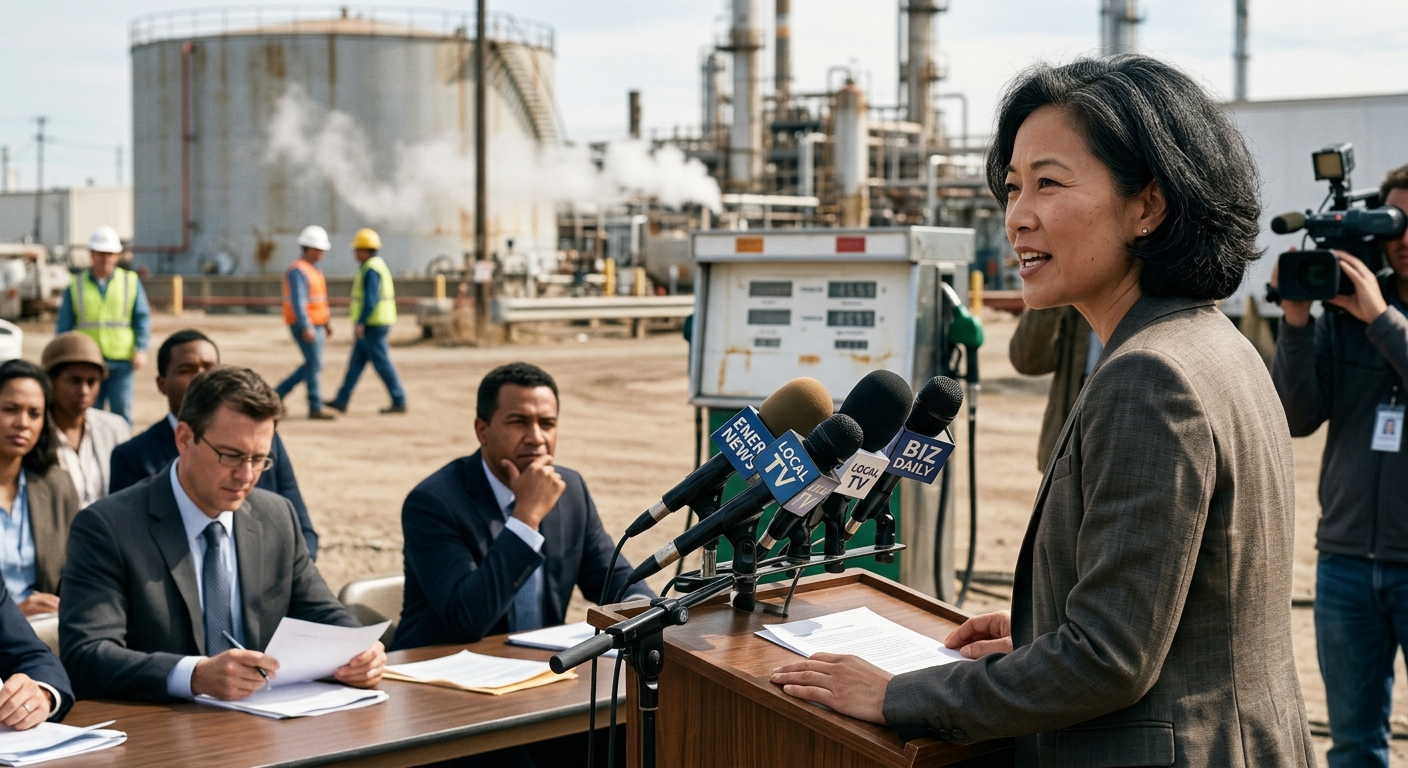
Gas markets are entering a more uncomfortable phase just as households and businesses prepare for winter. Prices have already moved sharply higher, but analysts warn that the next stage could be more painful if supply disruptions persist and colder weather arrives before storage facilities are adequately replenished. In Europe, the warning is especially significant: December gas futures have risen above €83 per megawatt-hour, exceeding the European Central Bank’s earlier adverse scenario of €77. Reuters also reports that European storage levels remain unusually low ahead of the heating season.
The immediate problem is not simply that there is less gas in the world. It is that several safety cushions have weakened at the same time. Middle Eastern LNG flows have been disrupted by the conflict involving Iran and by insecurity around the Strait of Hormuz. Asian buyers are competing for available cargoes, while Europe is trying to rebuild inventories after a difficult refill season. Reuters reports that Middle Eastern LNG exports have fallen sharply and that European storage was around 66% of capacity in early September, with Germany and the Netherlands substantially lower. That leaves the market unusually sensitive to weather, shipping disruptions and sudden changes in demand.
The consequences could spread well beyond the monthly energy bill. Natural gas is a critical input for electricity generation, heating and industrial production. When gas becomes expensive, power markets can respond because gas-fired plants are often used to balance electricity systems when renewable output is insufficient. Manufacturers that use gas directly — including producers of chemicals, fertilizers, glass, ceramics and metals — can also face higher operating costs. Some companies can absorb the increase temporarily; others may reduce production or pass the cost to customers.
Households may feel the pressure in several different ways. In countries where gas is widely used for heating, a costly winter could translate into higher utility bills just as families are already managing elevated food, housing and borrowing costs. Even households that rarely use gas can be affected indirectly through electricity prices and the cost of goods transported or manufactured using energy-intensive processes. The effect is therefore broader than the price printed on a gas bill.
There is also a timing problem. Energy prices do not always move through the economy immediately. Businesses often buy fuel under contracts, hedge future costs or delay price increases until existing inventories are exhausted. That can make the first months of a gas shock look less severe than the eventual impact. If high prices persist, however, more companies may be forced to reset prices, making the inflationary effect more visible later in the year and into 2027. Reuters reported this week that the European Central Bank is increasingly focused on gas and refined-fuel prices because of their potential to keep inflation elevated.
The risk is particularly acute because Europe has already changed its energy system since the crisis of 2021–22. Gas consumption has fallen, renewable generation has expanded, heat pumps have become more common and Europe has built greater LNG import capacity. Those changes provide important protection. But they do not make the continent immune to a synchronized supply shock. When many buyers compete for the same flexible LNG cargoes, prices can rise dramatically even when there is enough gas to avoid outright physical shortages.
Weather could ultimately decide how severe the winter becomes. A mild season would reduce heating demand and give traders more time to rebuild inventories. A prolonged cold spell, by contrast, could rapidly increase withdrawals from storage and intensify competition for LNG. That is why analysts are watching not only production and shipping routes but also forecasts for temperature and Asian demand. A cold winter would not automatically produce shortages, but it would remove much of the market’s remaining breathing room.
The shock is also being felt in the wider fuel market. Oil and refined products have climbed as conflict disrupts Middle Eastern infrastructure and transport routes. In the United States, gasoline has already risen to roughly $4.32 a gallon and diesel has moved above $6, according to recent market reports. Diesel is particularly important because trucks, agricultural machinery, construction equipment and many supply chains depend on it. Higher diesel costs can therefore feed into freight rates and eventually into the prices of everyday products.
Governments have limited easy options. Emergency reserves can cushion some oil disruptions, subsidies can reduce the immediate burden on households, and efforts to secure alternative LNG supplies can improve resilience. But each measure has trade-offs. Subsidies can be expensive, export restrictions can distort international markets, and buying scarce LNG at almost any price may simply shift the shortage elsewhere. The deeper lesson is that energy security is not only about having enough fuel underground or at a terminal; it is about having diversified suppliers, flexible infrastructure and sufficient reserves before a crisis begins.
For consumers and businesses, the most important uncertainty is no longer whether energy prices can rise. They already have. The question is how long the disruption lasts and whether another shock arrives before the market has recovered. Analysts are therefore cautious about declaring that the worst is inevitable, but the combination of low European storage, constrained LNG flows, geopolitical risk and winter demand creates a narrow margin for error. If those pressures persist, the next price jump may be only the beginning of a much wider economic adjustment.