













































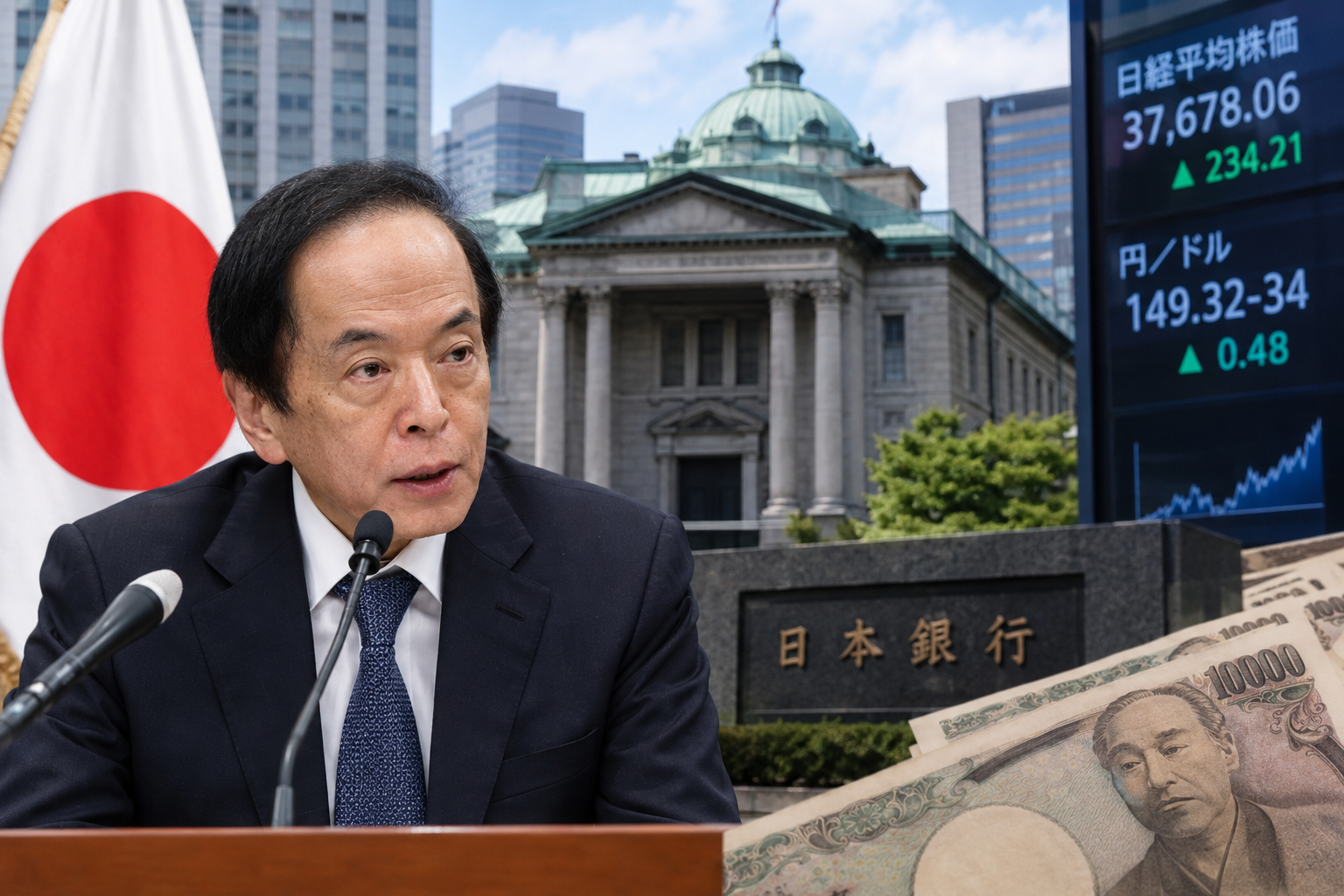
The Bank of Japan has raised its benchmark interest rate to 1.25%, taking borrowing costs to their highest level in 31 years as policymakers confront a more persistent inflation problem and a changing economic landscape. The quarter-point increase, announced on Friday, lifts the overnight call rate from 1% and marks another significant step away from the ultra-loose monetary policy that defined Japan for much of the past generation.
The decision was widely expected by financial markets, but its importance extends beyond the size of the move. Japan is attempting to establish a new monetary normal after years in which negative or near-zero rates were used to fight deflation and encourage spending. The latest increase signals that the central bank believes price pressures have become sufficiently durable to justify tighter financial conditions, even as questions remain about household demand and economic growth. Reuters reported that the move was intended to reduce the risk of inflation overshooting the Bank of Japan’s 2% target.
Inflation is not being driven by a single force. Consumer prices have been supported by higher food and other everyday costs, while energy prices have added another layer of pressure. Japan’s August core consumer inflation, excluding fresh food, rose 1.7% from a year earlier, while a measure excluding both fresh food and fuel increased 1.9%. Government subsidies have helped restrain some utility costs, meaning the headline numbers do not capture every source of pressure facing consumers.
Energy has become particularly important because Japan imports most of its fossil fuels. Recent increases in global oil prices have therefore fed directly into the country’s import bill. Reuters reported that Japanese imports rose 28% year on year in August, with the value of crude oil imports jumping sharply, while the country recorded a trade deficit of about 1.106 trillion yen. Higher energy costs can squeeze households and companies at the same time, creating a difficult policy problem for a central bank trying to prevent inflation from becoming entrenched without unnecessarily damaging demand.
The rate increase also carries consequences for the yen. Higher Japanese interest rates can make yen-denominated assets more attractive relative to investments elsewhere, particularly when investors expect further tightening. Yet the immediate market reaction showed why monetary policy is not simply a matter of moving rates upward. Reuters reported that the yen weakened beyond 157 per dollar after investors viewed the Bank of Japan’s guidance on future moves as less decisive than some had expected.
For Japanese households, the effects will be uneven. Savers can benefit as bank deposits and some fixed-income investments gradually offer better returns. Borrowers face the opposite reality. Mortgage payments, corporate loans and other forms of financing can become more expensive as financial institutions pass higher funding costs through to customers. Younger households and small businesses with limited cash buffers may feel the change more quickly than large companies with stronger balance sheets. A higher cost of credit can also cool housing activity and discourage some investment.
For businesses, the rate hike arrives at a complicated moment. Japan’s economy has shown resilience, and recent data indicated stronger business investment than initially estimated. Exports have also remained firm, particularly in semiconductor-related areas. But higher interest costs can reduce the incentive to expand, especially for smaller firms. Companies may respond by raising prices, cutting costs, delaying investment or accepting lower margins, depending on their ability to pass costs on to customers.
The move is also part of a broader global shift. Major central banks have been adjusting policy as inflation risks have returned through energy markets and geopolitical disruptions. Reuters reported that the Federal Reserve, Bank of England and other central banks are also dealing with renewed inflation concerns, although their economic conditions and policy rates differ considerably. Japan’s 1.25% rate remains low by international standards, but its historical significance is unusually large because it represents the country’s highest policy rate since the mid-1990s.
The deeper significance of the decision is that Japan is entering a period in which interest rates may once again become a normal part of economic life. That transition could reshape saving, borrowing, property markets, corporate investment and the government’s financing costs. It also tests whether the country can sustain wage gains and consumer demand while bringing inflation under control.
For now, the Bank of Japan is walking a narrow path. It wants to prevent a temporary energy and import-price shock from becoming a lasting inflation cycle, but it must also avoid choking an economy that has spent decades adapting to exceptionally cheap money. The 1.25% rate is therefore more than another quarter-point move. It is a signal that Japan’s monetary era is changing—and that the consequences will be felt far beyond the central bank’s headquarters in Tokyo.